Strategic Planning
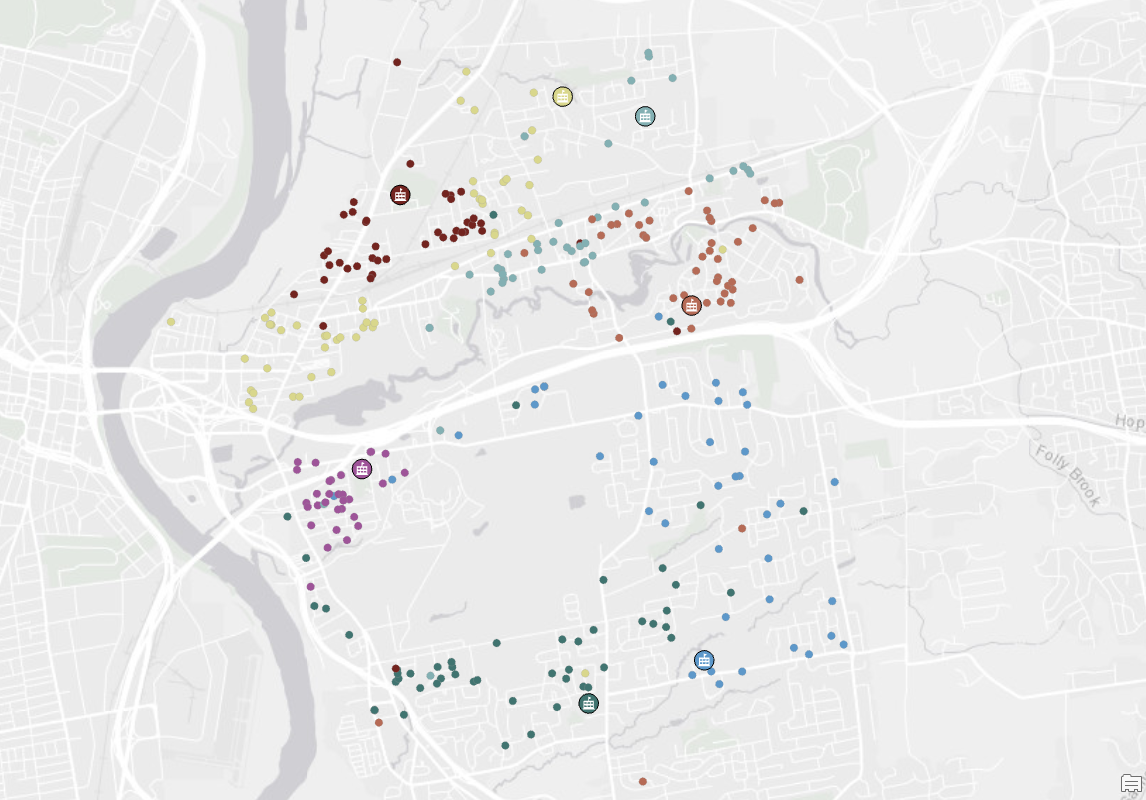
Before | Kindergarten placements at all seven physical neighborhood elementary schools in the district.
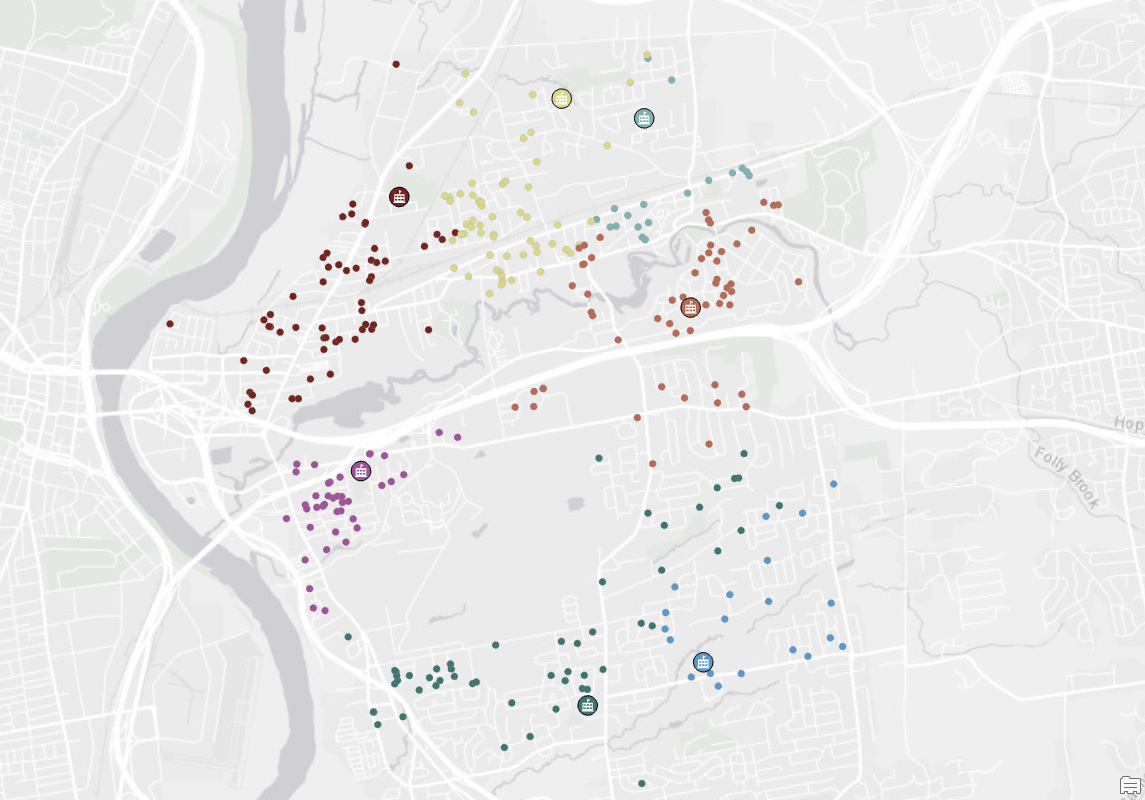
Optimization Scenario | Possible optimal kindergarten placements to minimize student travel and reduce general education classrooms by two.
Objective: This seven-elementary school district was considering alternatives to redistricting that would both level class sizes and achieve a high utilization rate.
Status Quo:
Maximum class sizes were 22 students, and 18 classrooms per grade level were needed.
Only 52.5 percent of the kindergarten students went to their closest school.
111 students were within 1 mile of their assigned school.
The average walking distance to their assigned school was 1.70 miles.
E3 Optimization:
Maximum class sizes were decreased to 21 students.
Number of classrooms decreased by two per grade level to just 16.
78.8 percent of the kindergarten students were then able to go to their closest school.
124 students could go to a school within one mile of their homes.
The average walking distance to their updated assignments was reduced by .36 miles to 1.34 miles.
All three of these key metrics for academic performance, safety and monetary savings show improvement. This could all be achieved just by adjusting new student assignments, not by moving students from one attended school to another, which tends to decrease academic performance.